
Brown County Scheduled vs Actual Release
ODRC uses the combined label Expected Release Date/Parole Eligibility Date. For a definite state-prison term, it may reflect the department's current sentence calculation. For an indeterminate or life term, it may instead mark when the Ohio Parole Board can consider release. Neither meaning promises an exit that day. A record that still says Incarcerated remains an in-custody record even when a future date appears.
Actual release is a completed custody event. Confirm it through current status, Parole/Release Detail, supervision dates, a discharge record, or the releasing office. Someone may leave ODRC for Adult Parole Authority supervision, transitional control, another custodian, or the community. Those paths differ. Leaving Brown County Jail for ODRC, ICE, the U.S. Marshals Service, or another jail is also a transfer, not proof of a return home.
A pretrial detainee generally has no sentence-based projected date. Bond, dismissal, a court order, or later sentencing controls that person's next step. Brown County Common Pleas handles felony matters, while Municipal Court handles misdemeanor and traffic cases. Both online dockets warn that entries may lag, so a timely answer may require the clerk or sheriff.
Find a Brown County Projected Release
First identify who holds the person. ODRC is the correct source only after an Ohio prison commitment. Brown County residence alone does not place someone in the state system. A county-only jail sentence may never appear in ODRC, and the live jail roster shows present custody rather than a future sentence calculation.
- For state prison, open the ODRC Offender Search. Use an exact offender number when known, or begin with a last name and few filters.
- Match identity, committing county, docket, admission date, and offense. Brown as County of Commitment means sentencing county, not residence.
- Read Status, aggregate sentence, jail-time credit, Expected Release Date/Parole Eligibility Date, and any hearing, transitional-control, or supervision fields together.
- For Brown County Jail, check the sentencing entry and call the sheriff at 937-378-4435 for custody and discharge records. Do not apply the state credit formula to a county term.
- Confirm the final event with the custodian. A hold, court order, data lag, or transfer can make an online date incomplete.
The full named-person path, including court and historic jail records, begins with the Brown County released-inmate search. It fits when the first question is whether a person left custody rather than when a sentence might end.
The official ODRC search screen shows the filters used to locate the right state-prison record.
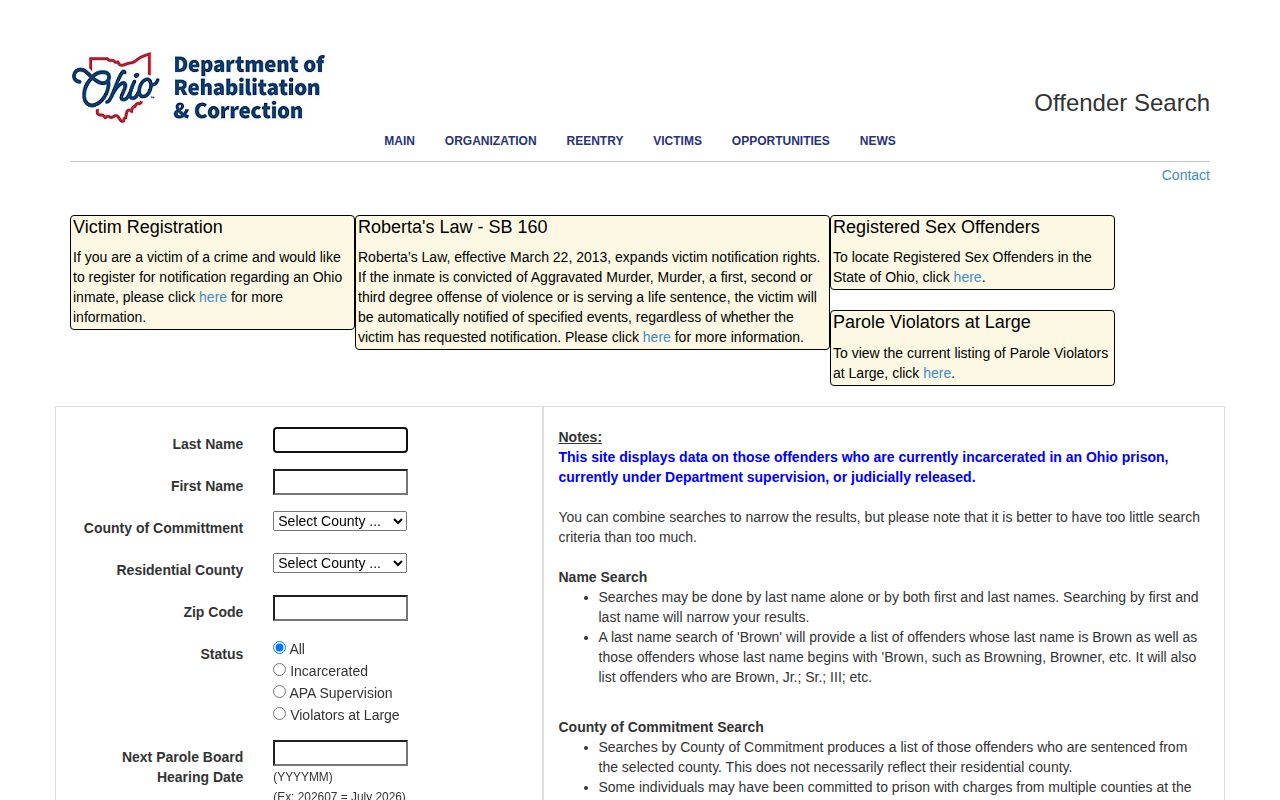
The form separates commitment county, residential county, status, hearing date, and offender number, which helps avoid false no-results and mismatched people.
Ohio Credit and Brown Release Dates
Ohio's current state-prison earned-credit framework is in ORC 2967.194 for the period beginning April 4, 2024. Subject to exclusions and caps, an eligible person can provisionally earn one or five days for each completed month of productive participation in an approved program or activity. A second qualifying activity can add credit, and certain qualifying completions may produce a larger award. ODRC reviews and finalizes each award.
Credit is not automatic. ODRC may deny or withdraw provisional credit after rule violations. Mandatory and nonreducible terms, specified homicide sentences, life without parole, and other listed offenses can be excluded. Sentence date and type matter because older sentences may fall under predecessor law. Today's formula cannot be applied to every older record.
The claim that everyone serves exactly 85 percent is false. Current law caps ordinary aggregate participation and completion credit at 15 percent for some eligible terms, which can resemble an 85-percent floor. Jail-time credit, special completion credit, exclusions, older law, judicial release, parole, and indefinite sentencing can change the result.
The Ohio earned-credit law supplies the controlling eligibility and limits.
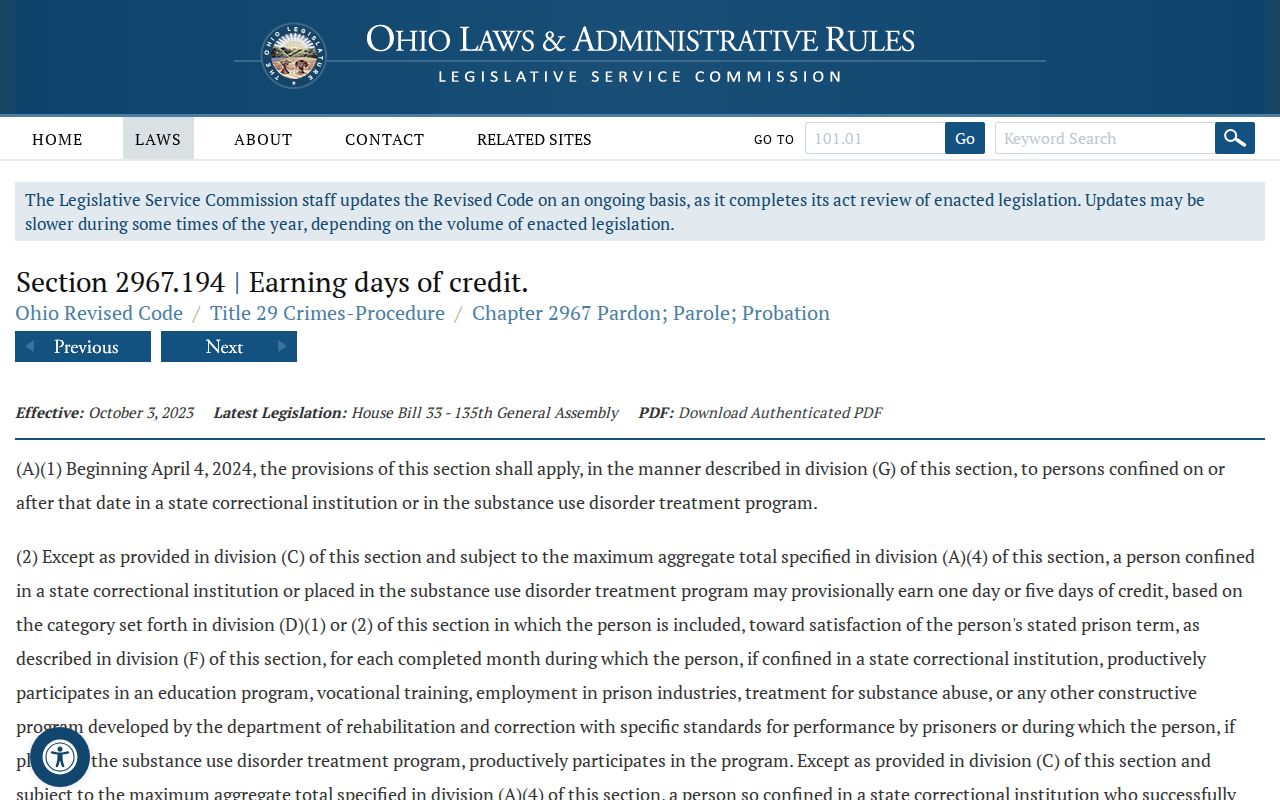
Its exclusions, award types, caps, and review process show why a quick percentage cannot replace the ODRC sentence record.
Pretrial confinement matters too. ORC 2967.191 governs jail-time credit for qualifying time already served. The sentencing court and ODRC calculation control any correction. Counting days from an arrest date is not authoritative.
Why Brown Release Dates Move
A projected date is the output of facts that can change. Some reduce a term, others extend it, and some alter the destination without changing the sentence. The public detail page can also lag an operational event.
| Factor | Effect on the date or release |
|---|---|
| Jail-time credit | Recognized pretrial days reduce the remaining calculation. |
| Earned credit | Approved activity may move an eligible date earlier; loss may move it later. |
| Excluded time | Mandatory portions cannot receive the same reduction. |
| Indefinite sentence | The minimum starts a process, while confinement may continue within the maximum. |
| Parole decision | Eligibility begins review. Denial or continuance means no physical release. |
| Court action | Judicial release, resentencing, appeal, or correction can revise the calculation. |
| Hold or detainer | Another county, federal agency, or ICE may take custody after ODRC release. |
For a qualifying Senate Bill 201 indefinite sentence, ORC 2967.271 creates a presumption and procedure tied to the minimum term, not an unconditional exit order. Parole eligibility likewise opens a decision point rather than guaranteeing release.
ODRC's status and date definitions explain the public labels.
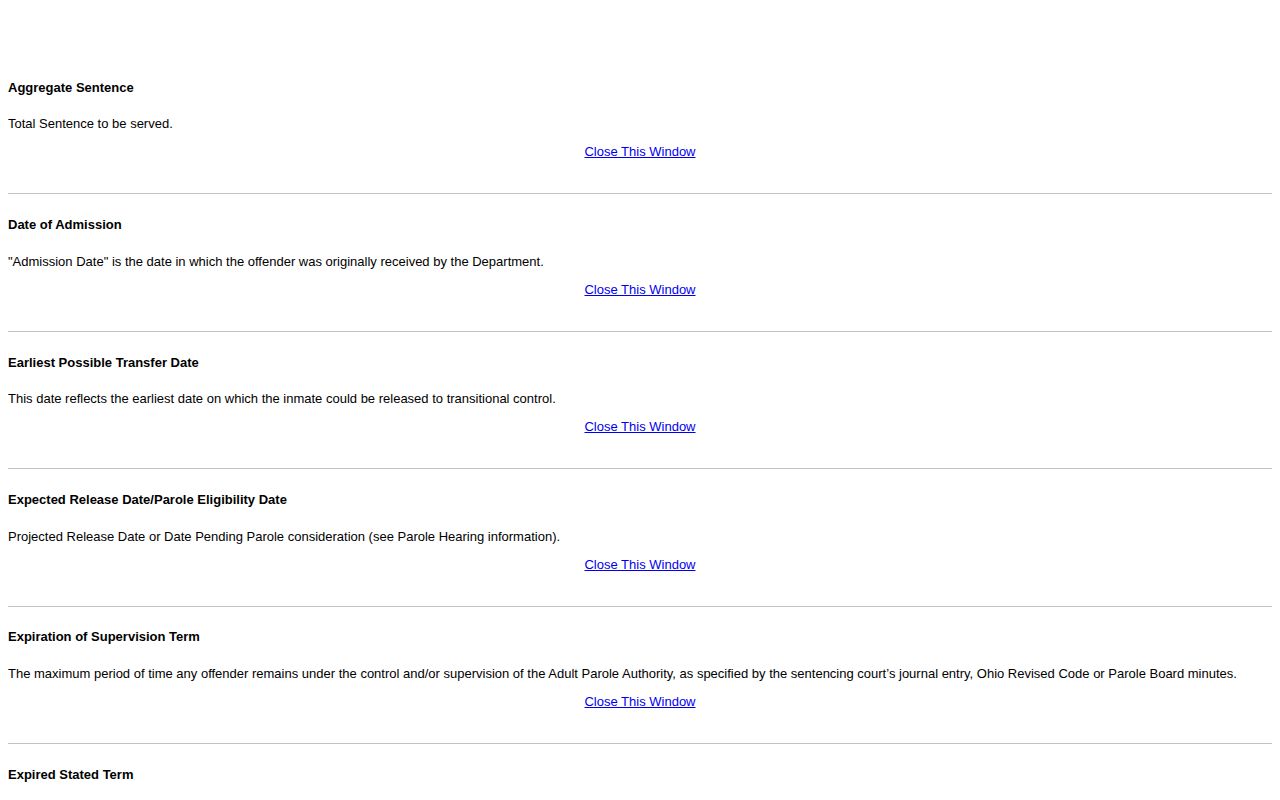
The definitions separate a projected release date from parole consideration and prevent a future field from being reported as completed release.
Confirm Brown County Actual Release
For ODRC, compare the expected date with current Status and Parole/Release Detail. APA Supervision means the person left prison but remains under state supervision. Released status should still be read with the detail record. If the record remains Incarcerated, the projected field is not proof of departure.
For Brown County Jail, ask the sheriff for the jail-register or arrest-record entry, release timestamp, recorded authority or disposition, and destination if maintained. The current Miami Valley Jails roster answers only whether the provider reports a person in custody. A missing name can reflect bond, time served, court order, transfer, or a data change.
Ohio VINE can give custody-change alerts for participating jail and ODRC records, but an alert does not identify every destination. The VINELink Release Check covers registration and verification. For prompt confirmation, call Brown County Jail at 937-378-4435 or use the ODRC record tied to the exact offender number.
- Projected release date
- The current calculated date for an eligible sentence.
- Parole eligibility
- The date review may begin, not an order to release.
- Discharge
- The recorded end of custody or supervision under stated terms.
- Detainer
- An authority that may send the person to another custodian.
Note: Brown County research found no official local jail good-time formula or weekend-release rule, so state-prison credits must not be applied to county terms.
Brown County ODRC Date Fields
An ODRC result has several date and status fields that answer different questions. Reading only the first date can confuse sentence calculation, parole review, supervision, and completed release. Identity fields should also be checked before any timeline is recorded.
| Field | What it means |
|---|---|
| Status | Shows Incarcerated, Released, APA Supervision, Judicial Release, or another published state status. |
| Expected Release Date/Parole Eligibility Date | A projected exit date or a date pending parole consideration, depending on the sentence. |
| Jail-time credit | Days recognized from qualifying confinement before the prison calculation. |
| Aggregate sentence | The combined sentence structure used in the state record. |
| Parole/Release Detail | Dates and type information that help confirm departure from prison. |
| Supervision fields | Start, period, expiration, and APA office details when state supervision applies. |
An offender-number search is the strongest match when the number is known. ODRC requires an A, R, or W prefix followed by six digits, without spaces or hyphens. A last-name search can also work. Too many filters may hide the correct result, especially when residential county is confused with sentencing county.
Residential County and ZIP are intended to narrow APA Supervision and Violators at Large results. They are not good filters for an incarcerated person. Brown as County of Commitment is useful for a known Brown County sentence, though a multi-county record may be indexed under the first listed commitment county.
Brown County Jail Release Calculation
A county-jail sentence follows the court entry and sheriff custody record, not the ODRC expected-date field. Start with the correct court. Common Pleas covers felony and general-division cases. Municipal Court covers misdemeanor and traffic matters. Look for judgment, sentence, jail-time credit, bond, dismissal, community control, commitment, or a later corrected entry.
Then ask the Brown County Sheriff for the matching jail-register entry and the actual discharge record. The request should identify the person, approximate booking period, and case number when available. Ask for the booked and released timestamps, recorded release authority or type, and destination or receiving agency fields that exist. The sheriff's retention schedule preserves jail registers and arrest records permanently, while commitments and warrants to discharge are held for two years.
The live roster cannot supply this historic calculation. It reports “Persons Currently In Custody” and a provider refresh interval. Once a person vanishes, that absence does not distinguish bond from time served, transfer, court release, or correction. Court and sheriff records must be compared.
No Brown County source established a local good-time formula, a fixed release hour, or a weekend adjustment rule. If a county sentence appears to end near a weekend or holiday, contact the jail and court rather than moving the date through an assumed rule. This preserves the difference between a mathematical estimate and the custodian's scheduled process.